






























Not In Innocence And Not In Asia. . .
I first heard of this child’s skull and the explosive argument about the human emergence from reading Robert Ardrey’s book African Genesis. It was a pivotal time in my life when I was hungry for spiritual guidance, having basically walked away, mostly, from the Baptist religion of my youth.
I would remain an agnostic for decades until finally becoming an atheist in my middle fifties. I dipped into this and that 60s/70s spiritual fad, read about Carlos Castaneda’s Don Juan, sorted through the detritus of various gurus and spiritual cults, glanced at the pamphlets I was handed while photographing protest marches in DC. None of it moved me much. I was a science geek from an early age, took a class in logic and semantics in college, and could not seriously abide plain nonsense no matter how enchanting it seemed to me as a work of art.
So I wandered through my early 1970s, dazed and confused…
I discovered Ardrey’s book at age twenty while working at Industrial Photo in Silver Spring, in a corner of the basement where it had been tossed by some prior worker among random open boxes of inventory. I picked it up and read…(I understand the sexism of the text I am about to quote…sorry…but it’s how he wrote it in 1961)
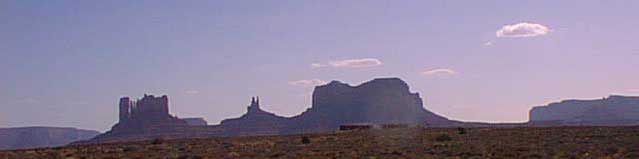
Not in innocence, and not in Asia, was [mankind] born. The home of our [fathers] was that of the African highland reaching north from the Cape to the Lakes of the Nile. Here we came about – slowly, ever so slowly – on a sky-swept savannah glowing with menace.
In neither bankruptcy nor bastardy did we face out long beginnings. [Man’s] line is legitimate. Our ancestry is firmly rooted in the animal world, and to its subtle, antique ways our hearts are yet pledged. Children of all animal kind, we inherited many a social nicety as well as the predator’s way. But most significant of all our gifts, as things turned out, was the legacy bequeathed us by those killer apes, our immediate forebears. Even in the first long days of our beginnings we held in our had the weapon, an instrument somewhat older than ourselves.
[Man] is a fraction of the animal world. Our history is an afterthought, no more, tacked to an infinite calendar. We are not so unique as we should like to believe. And if [man] in time of need seeks deeper knowledge concerning himself, then he must explore those animal horizons from which we made our quick little march.”
He was writing this during peak cold war about when I was doing my duck and cover drills in the elementary school I attended. So I have a hunch about what “time of need” he’s talking about there.
The book instantly grabbed me for these nuggets of pure gold on the first page: not born in original sin, but born of this earth, and we can know ourselves after all, but to do that we have to look to our past, to our evolutionary heritage. He makes it even plainer later in the book when he says we are not fallen angels but risen apes; a metaphor I have always held close.
His books have been rightly criticized for the over emphasis on the killer ape hypothesis. I’m told the opening sequence of Kubrick’s 2001 was heavily influenced by African Genesis. A different and more complete picture has emerged since the book was published. I bring it up here only to say that Ardrey made me familiar with the long and acrimonious argument Dart’s discovery began, as related in the above video. But science Does self correct, if the evidence is there. Eventually even his most ardent critics came to admit they were wrong, and Dart was right. And it was walking upright, on two legs, that grew the large brain, not the other way around, freeing the arms and hands to do…things.
And I think Ardrey’s point still stands, if not quite as dramatically as he put forward. Given our ancient ancestors’ lack of physical stature, our canines ridiculously small by comparison, having no claws or talons or poisonous venom, how long should we have lasted on those African plains, had we not been born with a weapon in our hands? This same videographer has another one about the one simple thing we could do that gave us an advantage over the other animals we were competing with for food: we could throw things, hit and inflict damage at a distance from our physical selves. Our bodies, our shoulders specifically, are adapted to it.
Rocks and stones first probably, then spears, and from there to arrows…bullets…nukes.
Ardrey addresses this in his book too. The weapon that gave us a survival advantage, now threatens it, if we don’t learn to manage as he put it, those deeper understandings of ourselves, and those animal horizons from which we have made our quick little march.