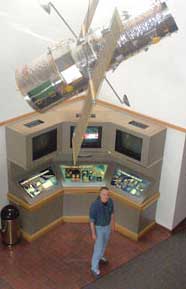
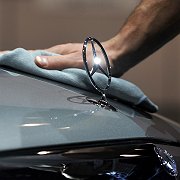
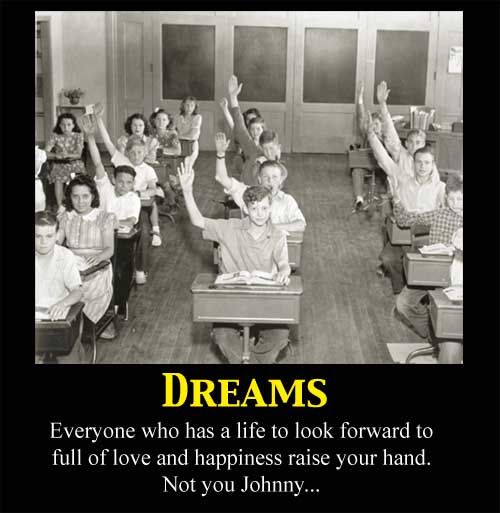
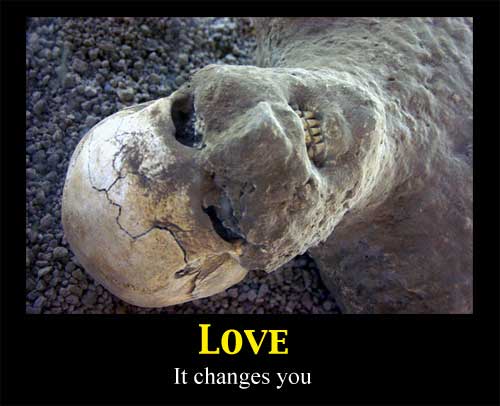
The Second Annual Casa del Garrett Valentine’s Day Poster Contest…(Part 3!)
Yes…it’s the day after Valentine’s Day…and here we are still sorting out our Valentine’s Day Poster Contest contenders. But dragging it out after it’s over is all part of the fun!
Here are some more worthy contenders that didn’t quite make it to the winner’s circle. But that only makes them more worthy!
Tomorrow…THE WINNER! You may want to be somewhere else…
I’d been thinking about the self-publishing options available to folks now (see my post below), and I found myself that morning scanning through some web links about photo book publishing. I’ve wanted to put together a book of my art photography too. I began scanning pages of comment about how well Apple’s online photo book publishing mechanism works with Aperture…the Apple photographer work flow software I use.
I discovered several insights into the problem of color management I’ve been wrestling with, ever since I got a request, that came with a promise of actual money, for a print of one of my Puerto Valarta images. It took me so many test prints to get the colors right off the printer, that I actually lost money on it. But it was worth it to me, just for the satisfaction of knowing I had a fan of my art photography out there who was willing to give me good money for a print they’d particularly liked.
Here’s the image that gave me so much trouble:
This is off the Puerto Vallarta gallery. You can’t really see it in this JPEG, but the actual image is rich with delicate detail in the floor tile and brick work, and there are so many beautifully subtle colors and gradients. I love it myself. But getting what I saw on Bagheera’s screen (Bagheera is my art room Mac) to match what I got from my printer, a very nice Epson R1800, turned out to be a royal hassle. This JPEG doesn’t do it much justice either…but I wouldn’t expect much fidelity from a JPEG. The printer was another story. I spent a lot of money on it to get something I could produce art quality prints with and I had no idea it would turn out to be so hard.
The worst…and you may find this hard to imagine…was that damn beige wall around the brick archway. I could not for the life of me get it right out of the printer. I could get the tile floor. I could get the brickwork. I could get the lovely wood in the shadows, and in the bright golden light of the morning sun in Puerto Vallarta. I could get the dog perfect…just perfect. I could not get that goddamned beige wall. It starts out with a distinctly reddish cast at the far end, and gradates over the stucco to the lighter, paler beige in the near end. It is just lovely if you get it right. But I kept getting a yellowish wall, or an orange-ish wall or some puke colored wall. I was having fits until finally, just by accident, I hit on a combination of Aperture output settings and printer color settings that got it right, and I was able to give my customer a good print of it.
This…I thought…cannot be right. I’d taken a profusion of notes during my struggle to get a good print of this image and looking through them the only thing I could say for sure is I had a combination of settings that would work on That One Photo and probably I’d have to do it all over again for any others. I knew there was this thing called "color management" you could enforce…somehow…which was supposed to use the color profiles of your printer and monitor to make sure that what you see on the screen is exactly the same as what you see in the final print. But whenever I looked into any of these color management systems they were all horribly expensive to buy and more complicated to install and use then I had the money or the time to fool with. There had to be an easier way.
Last summer I was asked at the last minute to do the photography for a relative’s wedding. Some of the photos I took were with the Canon 30D digital SLR. But some shots, the critical couple and family portraits were done with the Hasselblad. I’ve been hemming and hawing for months now about getting them prints because I knew it was going to be a massive effort to get each individual print right. They’ve been very patient, but it’s been embarrassing.
So I’m reading this article online about using Aperture to publish photobooks via Apple’s photobook service, and I see a simple, straightforward explanation of how Apple’s own internal color management system works that I’d never been able to find while I was struggling with the Puerto Vallarta photo…and suddenly everything snapped together for me.
I had only a vague idea that Apple even had color management built into the operating system. And there it was, laid out for me in an simple step-by-step process, to set it up in Aperture. Apple’s system is called "ColorSync", and since it was built-in to the OS, it Was as simple as I thought it had to be. Just a matter of getting the latest color profiles for my printer installed and then, in Aperture, switching on the onscreen proofing and making sure it was using the printer profiles. The default is the Apple RGB space. On the printer side instead of trying to set up a third-party color management system, I just switched on ColorSync. When Aperture printed, I just had to make sure it was using the printer profile for the particular kind of paper I had in it when it sent output to the printer. That was all I needed to do.
I ran a test print of the image above through it and it came out…perfectly. Then I got into the wedding photos I’d taken last summer. The wedding portraits were all taken outdoors under a tree with a little lake behind it and the lighting conditions kept varying because the bright puffy beautiful clouds in the background kept passing in front of it. I picked out an image of the couple that needed some adjustments in the light levels and tweaked until I got everything to my satisfaction. Then instead of making a test proof print, I just sent it directly to the printer using the ColorSync setup and the expensive high gloss paper. I wanted to see the final product right up front. It came out exactly right.
I was thrilled. Now I could make as many art prints as I wanted and not have to worry too much about wasting paper and spinning my wheels searching for the right combination of printer settings to get something to print the way I wanted it to print. I started work on the wedding prints I’d been promising my family…the southern Baptist side down in southern Virgina…for so long. It was great. Everything was coming off the printer perfectly. Just perfectly. I was delighted.
I’d printed up a nice 13" by 19" print of the couple’s wedding portrait, and thinking to myself with that sense of completeness and inner satisfaction an artist gets when you have a head of steam up and it all comes together and its all perfect that, Hey…They’re really going to like this… Hopefully it’ll make up for the delay in getting it all to them… And then I realized what I was doing.
It’s Valentine’s Day, I’m 55, I’ve been single almost all my life except for maybe that short affair I had with Keith ten years ago and even that was more a roller coaster of yes we are no we’re not yes we are no we’re not until he dumped me…I’m sick, absolutely sick with loneliness and despair is settling in to keep me company in my old age…and here I am happily, cheerfully even, working on other people’s wedding photos. Like…this is what my life was always meant to be after all. I exist, to serve other people’s happiness. I was born to watch other people get a love life and settle down. Keith settled down. My first high school crush is happily settled down and has been for over thirty years now with the person he calls his soulmate. And a certain heartless jackass I know in Arlington Virginia keeps telling me my problem is I just don’t work at it enough, like a sanctimonious billionaire who thinks the only reason people are poor is because they are lazy and just don’t want to work.
I get to watch it all…the parade of life. I get to point my camera at it. I get to make drawings and paintings of it. I have the skill…and the eye. I get to document it all as it passes me by. That’s why I was put here on this earth I guess. I think I saw it, finally, last night.
How I spent my Valentine’s day: I made other people’s wedding prints. Trust me, it wasn’t what I’d planned on doing. If someone had even suggested it I’d have laughed in their face. I’ll do them later…just not Valentine’s Day. Not when I’m so lonely while the whole fucking world celebrates being in love. And it just…happened. Like an omen. Like a tap on the shoulder reminding me I have a place in this world, and that’s not it. How I spent my Valentine’s day: I made other people’s wedding prints.
Well…I need to go get some more photo paper. And…ink.
The Second Annual Casa del Garrett Valentine’s Day Poster Contest…(Part 2!)
Okay…we’re a little behind schedule in posting our worthy Valentine’s Day Poster Contest runners-up here. Sorry. But that sense that things aren’t going according to plan is All Part Of The Fun!
Here are some more worthy contenders for the crown. Alas, they just didn’t quite measure up. But that only makes them even more worthy!
More worthy contenders who were left standing in the dust tomorrow!
There’s a bunch of you folks who come here on a daily basis…somewhat more who come here on a week-to-week basis. I can tell from the servers logs…but no…I have no idea who any of you are. Those of you who come here from a few of the major ISPs I don’t even know precisely where you live. But I have a small, but very satisfying audience here. And I am delighted with all of you…whether or not you comment. I have never once advertised this site. So I have to assume that those of you I don’t know personally, just stumbled upon my little place, and decided that it was worth revisiting regularly. That is just…amazing.
Per the previous post… I mentioned an author who has self-published a book on Authoritarianism. He has offered his book for free in PDF format to the world…but is also using a service called Lulu to create paperback copies if anyone wants to buy one. I just took a closer look at Lulu…and it is interesting to me on a number of levels.
Services like Lulu offer authors the ability to have books literally made-to-order, at prices competitive with what you’d get from Amazon or any mortar and brick bookseller. So if someone likes what you do, the technology now exists to make one-off copies for anyone who wants one. You don’t have to interest a big publisher. That means if your material is such that it only is of interest to a small subset of readers, you can still have your book printed and they can still read you.
I’ve been wanting to do books for ages. I have two primary interests here: my art photography naturally…but also some works of fiction. This is what I want to ask you about.
Most of you may not know this, but some years ago I had a series of fantasy world stories up here on my web site: The Skywatchers of Aden.
The series takes place in an alternate universe earth…one with different continents and different histories. There is a struggle to the death involving a theocratic totalitarian state…Ekrus…and a nation of refugees from that state…Aden…comprised of many non-conformist faiths who came together to form their own nation…a democracy based on religious freedom. But they cannot fight alone. There is a third nation…Atria…a nation of many native peoples who hold to many different values and worship many different gods…that is caught in the middle of this war between the theocracy and the democracy. Somehow, these people of wildly divergent views on faith and morality have to find common ground in order to preserver against the large and powerful theocratic state. The central focus of the stories is on a same-sex couple…one of which is a devout non-conformist believer from the nation of Aden…the other a native of Atria…who find themselves in love and in the middle of this scorched earth war between Aden and Ekrus.
As I said…some time ago I had these stories up here…and then I pulled them down when I became dissatisfied with them. I am not naturally a writer…I am a graphic artist. But I do write occasionally and this fantasy series still attracts my attention. I have been meaning to re-write some of what I initially put out and add some illustrations and re-post it. My question to you all is…would you be interested in reading it? Those of you who keep coming back here to read my occasional posts…is it conceivable to you that you might be interested in reading some fiction I might produce?
Just curious…because it seems the technology exists for me to turn this into a book after all. I would love to…one day…hold a book of my own in my hands.
If there is enough interest…I’ll start reposting some of the stories. I still want to add some illustrations though. But feedback would be…wonderful.
You knew the culture warriors were a bitter lot, didn’t you? This came across one of the gay news lists I subscribe to this morning…
20 Oklahoma legislators vote against recording gay pastor’s prayer in House Journal
Scott Jones, pastor of the Cathedral of Hope-Oklahoma City, delivered the opening prayer Monday in the Oklahoma House of Representatives, according to this report on Jones’ blog, MyQuest. The Cathedral of Hope-OKC is a congregation of the United Church of Christ that spun off from Dallas’ Cathedral of Hope, known as the world’s largest gay church.
The Rev. Scott Jones thanked his legislator, Rep. Al McAffrey, who asked him to pray to open Wednesday’s House session and acknowledged several in the gallery – "dear friends, my wonderful parents, and my loving partner and fiance, Michael.”
Jones is the pastor of the Cathedral of Hope — Oklahoma City.
When McAffrey, D-Oklahoma City, asked in the session’s closing minutes that Jones’ prayer be made part of the House journal, the chamber’s official record, Rep. John Wright objected
20 upstanding Oklahoma legislators objected to including Jones’ prayer in the record…a thing that is so routine nobody can remember when anyone ever objected to a prayer being included in the record. More Here. Note that the the Oklahoman (The State’s Most Trusted Newspaper) account of the incident characterizes the objectors as being merely "annoyed", and that their annoyance was over Jones’ opening remarks. But the prayer, which even "the state’s most trusted newspaper" characterized as a "generic prayer", was what they voted to remove from the record. You can almost hear Wright gritting his teeth when he tells "the state’s most trusted newspaper" that his motion was "not meant to be derogatory nor divisive nor in any way trying to cause diminishment of someone’s sense of self-worth."
Contacted later, Wright, R-Broken Arrow, said the practice of including a minister’s prayer in the House journal usually is reserved for Thursdays, the last workday for legislators.
That’s one side of his mouth. And here’s the other…spoken in practically the same breath…
"My actions were motivated by the faith, so now if you want to take it and cause the public to be inflamed about it, well, that’s at your feet,” Wright said.
Which brings me to This Post over at Pam’s House Blend. It’s about a book written by a researcher whose primary focus has been the authoritarian mindset.
Yesterday I came across a most interesting book, available on-line at The Authoritarians, which provides a significant body of scientific research that goes a long way to explaining why religious followers (and leaders) have such a hard time with us GLBT folk. The author [Robert Altemeyer] is a professor of psychology at the University of Manitoba and has been studying authoritarian people for decades as a psychological researcher.
Altermeyer is offering his book as a free download, or for $9.74 plus shipping for a bound edition. Here’s a few excepts pinched off Pam’s…
p. 139-140: This chapter has presented my main research findings on religious fundamentalists. The first thing I want to emphasize, in light of the rest of this book, is that they are highly likely to be authoritarian followers. They are highly submissive to established authority, aggressive in the name of that authority, and conventional to the point of insisting everyone should behave as their authorities decide. They are fearful and self-righteous and have a lot of hostility in them that they readily direct toward various out-groups. They are easily incited, easily led, rather un-inclined to think for themselves, largely impervious to facts and reason, and rely instead on social support to maintain their beliefs. They bring strong loyalty to their in-groups, have thick-walled, highly compartmentalized minds, use a lot of double standards in their judgments, are surprisingly unprincipled at times, and are often hypocrites.
But they are also Teflon-coated when it comes to guilt. They are blind to themselves, ethnocentric and prejudiced, and as closed-minded as they are narrowminded. They can be woefully uninformed about things they oppose, but they prefer ignorance and want to make others become as ignorant as they. They are also surprisingly uninformed about the things they say they believe in, and deep, deep, deep down inside many of them have secret doubts about their core belief. But they are very happy, highly giving, and quite zealous. In fact, they are about the only zealous people around nowadays in North America, which explains a lot of their success in their endless (and necessary) pursuit of converts.
Emphasis mine. Sound familiar? The motion was not meant to be derogatory nor divisive nor in any way trying to cause diminishment of someone’s sense of self-worth…the practice of including a minister’s prayer in the House journal usually is reserved for Thursdays, the last workday for legislators…my actions were motivated by the faith, so now if you want to take it and cause the public to be inflamed about it, well, that’s at your feet… Well that certainly explains that, doesn’t it senator?
I try, when I rail against this sort of thing here, to distinguish between fundamentalists and evangelicals, because the mindset between the two is categorically different. Fundamentalists have certainty. Evangelicals have faith. They could not be more different things. The fundamentalists’ certainty is hollow. It is brittle. It is delicate. We are not gods after all, that we can have perfect understanding. Uncertainty is the human condition, which is why we need faith. But faith is also the companion to humility. We are not gods. We are human beings and we screw it up sometimes. We need to keep that in mind from time to time, to insure we don’t screw it up even more. But the fundamentalist is loath to admit their weaknesses other then to say by rote that they are sinners like everyone else…only forgiven. This they know for a fact. They are forgiven…and you are not. Certainty. But certainty collapses like a soap bubble at the slightest touch of reality. So reality becomes the enemy. So ‘truth’ becomes whatever keeps the bubble safe.
Faith is not certainty. Faith is trust, in the face of doubt. Sometimes, terrible doubt. Here is Fred Clark at his dazzling best, discussing the difference between the religious certitude of the authors of the Left Behind books, and faith…
The New Hope Village Church is being run by a post-rapture skeleton crew consisting of the apostate Rev. Bruce Barnes and get-back Loretta. Most of the following chapter consists of the long, sad saga of Barnes’ former sham-faith.
Before we dive into that extended monologue, a brief aside on the Rev. Barnes’ former vocation. He (re-)introduced himself to Rayford Steele as New Hope’s "visitation pastor," and repeatedly makes clear that his was a lesser, subordinate role to that of the senior pastor — the Rev. Vernon Billings. This is typical of the hierarchical structure among the staff at many nondenominational churches. This ranges from the senior pastor at the top (i.e., the pope) down through the various "associate" pastors, followed by "assistant" pastors — including visitation staff, like Bruce — on down to the youth pastor, who is just out of Bible College, wears jeans, and ranks somewhere just below the worship leader and just above the head usher.
"I was good at it," Bruce Barnes says of his role as visitation pastor.
This is not true. This cannot be true. All of Bruce Barnes’ extended testimony to Rayford and Chloe is premised on the idea that his getting left behind produced an epiphany of self-knowledge, but this newfound self-knowledge does not extend to the recognition that he cannot have been very comforting in his role as a half-assed poser of a visitation pastor.
Part of the problem here, I think, is that Tim LaHaye is, himself, was a senior pastor during his days at Scott Memorial Baptist Church in San Diego. I doubt he understands the nature of "visitation" ministry any better than Bruce Barnes does. Here’s how Barnes described that work:
"My job was to visit people in their homes and nursing homes and hospitals every day. I was good at it. I encouraged them, smiled at them, talked with them, prayed with them, even read Scripture to them."
Isn’t that nice? He smiled at them. But what Barnes/LaHaye don’t explain or seem to understand is why these people are stuck in nursing homes and hospitals. One gets the sense that an amiable visit from Barnes might have been welcomed by a parishioner who was, say, laid up for six weeks with a broken leg that would soon heal as good as new. But for a parishioner undergoing long-shot cancer treatments — adding the pain of chemotherapy to the already crippling pain of their disease in the hopes that maybe, maybe it would help them live long enough to see their youngest child graduate fifth grade — I can’t imagine that a visit from Guy Smiley would have been much help.
It’s not unusual for seminary students to experience a crisis of faith — and not every student’s faith survives this crisis. The common misperception is that this is due to all that book-larnin’ — that reading Bultmann or the latest from the Jesus Seminar is inherently dangerous to one’s faith. (Far safer to maintain a pose of anti-intellectual piety — which is, again, why many evangelicals prefer the safety of "Bible college" to the academic perils of seminary.) I suppose it’s theoretically possible that some suggestible seminarian might be overwhelmed by such exposure to liberal scholarship, but I’ve never met such a person. No, the real reason that seminary is a crucible for faith has nothing to do with intellectual study. It has to do with CPE.
CPE stands for "clinical pastoral education" — better known as the front lines. CPE has nothing to do with Vernon Billings’ job. It doesn’t involve preaching from a pulpit. It involves, rather, visitation — ministering to people in "nursing homes and hospitals."
Gordon Atkinson, the Real Live Preacher, refers to CPE as "Tear the Young Minister a New One" and describes how his own CPE experience led to a dark night of the soul:
… people facing death don’t give a fuck about your interpretation of II Timothy. Some take the “bloodied, but unbowed” road, but most dying people want to pray with the chaplain. And they don’t want weak-ass prayers either. They don’t want you to pray that God’s will be done. …
I threw myself into it. I prayed holding hands and cradling heads. I prayed with children and old men. I prayed with a man who lost his tongue to cancer. I lent him mine. I prayed my ass off. I had 50 variations of every prayer you could imagine, one hell of a repertoire.
I started noticing something. When the doctors said someone was going to die, they did. When they said 10 percent chance of survival, about 9 out of 10 died. The odds ran pretty much as predicted by the doctors. I mean, is this praying doing ANYTHING?
Compare that with Barnes’ facile summary of his role as a "visitation pastor." If Barnes ever met with someone who was dying, he doesn’t seem to have noticed. The RLP goes on to describe the final, fatal blow that CPE dealt to his young faith. Her name was Jenny:
Thirtysomething. Cute. New mother with two little kids. Breast cancer. Found it too late. Spread all over. Absolutely going to die.
Jenny had only one request. “I know I’m going to die, chaplain. I need time to finish this. It’s for my kids. Pray with me that God will give me the strength to finish it.”
She showed me the needlepoint pillow she was making for her children. It was an “alphabet blocks and apples” kind of thing. She knew she would not be there for them. Would not drop them off at kindergarten, would not see baseball games, would not help her daughter pick out her first bra. No weddings, no grandkids. Nothing.
She had this fantasy that her children would cherish this thing — sleep with it, snuggle it. Someday it might be lovingly put on display at her daughter’s wedding. Perhaps there would be a moment of silence. Some part of her would be there.
I was totally hooked. We prayed. We believed. Jesus, this was the kind of prayer you could believe in. We were like idiots and fools.
A couple of days later I went to see her only to find the room filled with doctors and nurses. She was having violent convulsions and terrible pain. I watched while she died hard. Real hard.
As the door shut, the last thing I saw was the unfinished needlepoint lying on the floor.
A faith that matters, a faith that is worth anything real, or anything at all, has to be able to account for Jenny’s story. Her story, after all, is everyone’s story — the details of time and place may differ somewhat, but not the ending. You and me, and everyone we know, we’re all going to die. Hard. A faith that cannot account for this must give way either to despair or denial.
The faith described in Left Behind cannot account for this. It’s all about denial. Proudly so. "Can you imagine," Irene Steele gushes, "Jesus coming back to get us before we die?"
Can you imagine a visitation pastor bringing such a message to hospitals and nursing homes and people like Jenny?
This is what is missing from the megamall cathedrals of the heartland. They have plenty of religion, but no faith. Because faith takes a degree of courage. They are in love with the bible, for its physicality. It can give them any answer they want to hear. But it takes a bit of nerve to look God in the face, and ask a question. Because you might get an answer. Why no Pope Urban…actually the earth isn’t at the center of the universe…and oh, by the way…neither are you…
This is why they hate gay folk. Because we are people of faith. I’m not talking about religious faith particularly. But…faith. It’s why the sincere prayers of a gay pastor had to be stricken from the record in Oklahoma. Not because he was a gay man, not because his church practiced heresy, but because he kept his faith despite the multitude of pulpits thundering at him their certainty that he was an abomination in the eyes of god. And so they hate us all…not because we are homosexuals, but because no matter how many times the likes of Sally Kern say we are a bigger danger to America then terrorists, no matter how many times they spit in our faces in the halls of government, or on TV, no matter how many anti-gay amendments they pass, no matter how many anti-gay conferences they organize, no matter how many millions of anti-gay pamphlets they print and wave in our faces, and in our neighbors faces, we still rise every morning, and go on about our lives, hoping for a better world then the gutter they live in, and want us to live in too…working for it in whatever small way we can, with whatever small things we have within us to give to it, despite the horrific torrent of hatred that surrounds us…knowing, somehow, deep down in our hearts, that the better world is out there somewhere.
No thunderstorms last night after all. I stood out on my front porch and watched the front come in and all we got was a few periods of heavy rain and that was it. After I went to bed I could hear the wind start to pick up, and throughout the night I could hear random noises from the alleyway. A few plastic trash cans being kicked around. Someone’s aluminum awning getting smacked by something carried along by the wind. No thunder, no lightning. Bah. Central Maryland never gets any really interesting weather. Which is good I guess because the interesting stuff tends to be a tad destructive.
According to the news the wind last night actually cased a partial collapse of an abandoned rowhouse. But I doubt the wind is giving itself a high five over it. Abandoned rowhouses in the worst of the city neighborhoods look like they’d collapse if someone stared at them too hard. There are also the usual reports of power outages you get with any high wind situation. But nothing major that I can tell. It’s like the Appalachians take the kick out of anything that gets going on the plains.
A Weather Report…For My Family Out In California Where They Don’t Have Weather…
A little oddness can be charming in a person…but in the weather its a tad scary. Just a few weeks ago the temperature was in the single digits here in Charm City. It is now, I kid you not, shirtsleeve weather outside. Seriously. I am about to go for a little before bed walk around the neighborhood without even so much as a light jacket. It is too warm for it.
When you see severe temperature shifts like this you pretty much know you’re going to be in for it. Normal right now is cold. This is not normal. So when nature restores normal it isn’t likely to be pretty. They’re calling for some bad thunderstorms later tonight, around midnight. This would be the same storm front that caused the tornadoes in the mid-west earlier.
I mean…seriously…shirtsleeve weather in early February in Baltimore? Get real. Just this morning I went to work wearing my leather jacket with the removable liner in. When I got home I couldn’t believe how warm it had become. Not good. The winds when the front hits will be pretty fierce…tornadoes or no. But so far they aren’t warning us about tornadoes yet. Just strong winds tonight and tomorrow.
I brought my bird feeders inside, lest they be blown off the tree out front. I think I’ll probably bring in the deck chairs and tables too.
Quoted from Slashdot… Here is why Wikipedia’s standard of what constitutes a fact is a bit problematic…
An anonymous reader writes
"Germany has a new minister of economic affairs. Mr. von und zu Guttenberg is descended from an old and noble lineage, so his official name is very long: Karl Theodor Maria Nikolaus Johann Jacob Philipp Franz Joseph Sylvester Freiherr von und zu Guttenberg. When first there were rumors that he would be appointed to the post, someone changed his Wikipedia entry and added the name ‘Wilhelm,’ so Wikipedia stated his full name as: Karl Theodor Maria Nikolaus Johann Jacob Philipp Wilhelm. What resulted from this edit points up a big problem for our information society (in German; Google translation). The German and international press picked up the wrong name from Wikipedia — including well-known newspapers, Internet sites, and TV news such as spiegel.de, Bild, heute.de, TAZ, or Süddeutsche Zeitung. In the meantime, the change on Wikipedia was reverted, with a request for proof of the name. The proof was quickly found. On spiegel.de an article cites Mr. von und zu Guttenberg using his ‘full name’; however, while the quote might have been real, the full name seems to have been looked up on Wikipedia while the false edit was in place. So the circle was closed: Wikipedia states a false fact, a reputable media outlet copies the false fact, and this outlet is then used as the source to prove the false fact to Wikipedia." Franz Joseph Sylvester Freiherr von und zu Guttenberg
Wikipedia bans articles based on the writer’s own research. Articles in Wikipedia are simply supposed cite other sources for the facts presented. But when those facts are challenged then someone, somewhere, somehow, has to show that one source is better then another, and that’s research.
If all you are doing is simply passing along what someone else says uncritically, then you are not a knowledge base, you are a gossip columnist.
The Second Annual Casa del Garrett Valentine’s Day Poster Contest…
I hereby declare the opening of the Second Annual Casa del Garrett Valentine’s Day Poster Contest! What fun. But before we go on, I have an important first announcement to make: The contest is closed to new entries. Sorry to all you folks who didn’t get an entry in on time. But that feeling of being left out is all part of the fun!
Already we have some very worthy first entries…
More worthy entries to come! The winner (which, in the spirit of things, has already been chosen before the contest was even announced!) will be shown on Valentine’s Day. You may not want to look…
[Update…] Last year’s contest, contest entries are Here, Here and Here. Last year’s winner is Here.
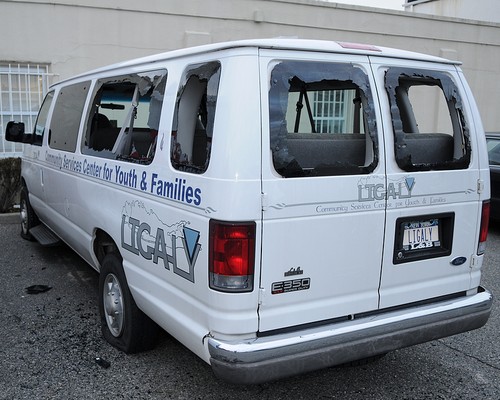
Some time ago the Bay Shore Gay and Lesbian Center for Youths was vandalized. Its front door was broken and its van had its tires slashed, its windows busted out, and its sideview mirrors mangled.
Today I read that arrests in the case have been made and…surprise, surprise, the police have in their impartial wisdom determined that the vandals had not a prejudiced bone in their bodies after all…
Suffolk County Executive Steve Levy called the vandalism at a Bay Shore gay and lesbian center for youths an "attack against the gay community."
Gov. David A. Paterson dispatched the state’s commissioner of human rights to visit the site and deliver a message calling for acceptance.
And the Suffolk County Police Hate Crimes Unit investigated last week’s incident as a hate crime.
It turns out the vandalism at the Long Island Gay and Lesbian Youth Center was not a hate crime after all, police said Tuesday.
What a relief to know that! Because…er…because… Well because the police just say so…
Police declined to say what led them to determine the crime was not bias-related.
I see. Three men and a woman, two of them 21 years old, one 20 and one 19, decided to slash a van’s tires completely at random. And then they broke out all its windows. And then they mangled the sideview mirrors. And then…again completely at random, they decided to break out a door that only happened to belong to the same group that owned the van. Just…on a lark… It had nothing to do with the fact that the van had the Long Island LGBT Youth center logo on it. And that door…it was just a coincidence that it also happened to be the door to the Long Island LGBT Youth center. There was no anti-gay animus involved here. Take our word for it. Because we insist you take our word for it.
Police arrested three men and a woman, all from Bay Shore, Monday in connection with the vandalism and charged each of them with second-degree criminal mischief. None of the four was charged with a hate crime.
Mischief…
Mischief…
But seriously…what more could attacking homosexuals amount to anyway, other then mischief? You say "hate crime" like its a bad thing…
[Update…] Reports are coming out now that two of the suspects were former clients of the center, who had been asked to leave for an as yet unspecified disruptive behavior…more then three years ago.
If We Could Put The DRM In Your Eyes And Ears We Would
Anyone visiting my house for even a few minutes can see what a book lover I am. Casa del Garrett is full of book cases and book shelves and they’re full of books I’ve been collecting since I was a kid. Somehow during the move from Rockville to Baltimore I lost two boxes full of paperbacks and I still grieve over the loss of some of them. But to all you Star Trek fans out there I still have, for example, a bunch of first editions of James Blish’s Star Trek books, including a first printing of Spock Must Die which was the first original Star Trek novel ever published.
I have a first printing of Arthur C. Clarke’s 2001 in paperback, first editions in hardback of all his later sequels, 2010, 2061, and 3001. A first hardback edition of The Songs of Distant Earth. A first paperback printing of his Fountains of Paradise. I have hardback first editions of Mary Renault’s The Fire From Heaven and The Persian Boy, and the paperback first edition of Funeral Games. The seemingly odd mix of hardback and paperback editions tracks with times I had the money for the hardback and times I didn’t.
I have tons of other first editions on my bookshelves. I tell you this not to present myself as a book collector, but just simply as a reader. I keep nearly all the books I read. Unless I really hate it, like I absolutely despise Frank Herbert’s Soul Catcher, which I threw across the room when I was finished with it, or unless a book bores me to tears, it will generally find a permanent home on my shelves..not as a collector’s item, but as something to pick up and read a passage from again, if not the whole thing, every so often.
I love books. They have been my escape ever since I was a kid. I can’t remember how many times I got caught in class reading a paperback hidden behind a textbook. One teacher, who managed to make the history of World War II boring, gave me a good chewing out in front of the class for about ten minutes, demanding to know if my copy of Louis L’amour’s Flint was more important then history class. It was all I could do to keep biting my tongue and not telling him no, just his history class.
I love to read. I spend more time at home now web surfing then watching TV because it is an act of reading and what is more, discovering links between the things I am reading and other things I’ve never read before, as opposed to passively being entertained by the tube. I am not at all averse to seeing words on a computer screen. In fact I love it. I love the way one thing can link to another, and then to another still. I love how you can browse entire libraries of books and essays and articles on this and that all from home. The Internet is the best encylopedia ever, the best instruction manual ever, the best library ever. You can explore. And it took me all of about a minute to get sick, thoroughly sick, of the hype over Amazon’s new Kindle…which is like the old Kindle, only new.
Yes books take up space. Yes, it would be nice to be able to read anything from my personal library while away from home. Books weigh tons. I’ve moved several times on the way from Rockville where I grew up to Casa del Garrett and I can tell you almost half the mass of moving my stuff is in the form of books…many, many boxes of them that just about break your back. It would be nice to just have much of it, if not all, in electric form. There’s a scene in Arthur C. Clarke’s The Songs of Distant Earth, where a space traveler reverently takes out of a sealed container his prize posession: a first edition of Conan Doyle’s Sherlock Holmes stories. It was a prize because books off earth were so rare…almost non-existant. If our books are to journey with us to the stars, they’ll have to weigh a whole lot less.
But here’s the problem: Suppose you were offered a book that could only be read with a pair of reading glasses made by the publisher of the book. Oh…and the glasses will cost you $360 dollars. But you could use them to read a whole lot of other books from that same publisher. But all those books could only be read by those glasses. And whether or not those glasses kept on working was solely at the discretion of the publisher of those books. Doesn’t take much thinking to realize that all you are buying when you purchase those books, is a dust jacket only those glasses can open up…not the right to read what is inside. Those books can be closed forever to you, at the discretion of the publisher, at any time.
And it gets worse. Suppose somebody decides that the contents of a particular book are offensive in some way. Maybe its sex. Maybe it’s political. Maybe its an expose’ of corporate malfeasance that somebody in some corporate boardroom somewhere decides you shouldn’t be able to read anymore. A flick of the switch from corporate headquarters and any book in that library suddenly vanishes…like it never existed. And it happens to all the copies of that book, in everyone’s personal library, all over the world. Just like that. Snap. Gone. Censorship was never so easy, so simple, so beautifully invisiable. What book? There was never any such book.
No thank you. I learned to read before I entered grade school. I still remember a bit of how difficult it was to get what all those marks on the paper were telling me. But mom was patient and eventually I got the hang of it and that was my key to the world books opened up for me. And what a world. Down the Navajo Trail, along the back alleys and side streets of Old London, across the sea to Treasure Island, down Persia to Babylon with Alexander and through the stargate and back again. Corporate America can have my ability to read when they pry it from my cold dead eyes.
Contemplating The City Of Tomorrow While Calculating Gallons Per Mile
They’re figuring out now, that gallons-per-miles gives folks a better way to compare fuel efficiency and savings among cars then their miles per gallon figure. I’d intuited this for years, probably because I love taking big cross-country road trips. Take a few of those and pretty soon come to view your car’s gas mileage in terms of how much the total distance you went cost you rather then how many miles you get for the price of one gallon. The first thing I did when I seriously started thinking about replacing the Honda Accord with the Mercedes was try to figure out how much more it would cost me to drive the Mercedes from Baltimore to California.
Turns out…not so much. The Mercedes is actually very fuel efficient for a six banger. It takes the more expensive premium gas, but it uses it almost as well as the Accord did, and the Accord was a four banger mated to a five speed manual transmission. The Mercedes has a seven speed (yes…seven) automatic. If I let the cruse control decide how to maintain speed on the highway I actually get anywhere from 29 to 31 or 32 mpg. One trip back from southern Virgina I got 33 mpg out of it. That was at Virginia’s feeble 65 mph speed limit, which I didn’t want to break because the highway cops are thick on that stretch of I-83. So I had the cruse control on the whole time. But the car is no fun to drive like that.
This gallons-per-mile calculator tells me that the Mercedes, using only the EPA figures and not my own better highway figures, only needs an extra 38 gallons of gas to go from Baltimore to California and back again, over the Accord. That’s only a little over two tankfulls…not really all that much. But it is more expensive gas to start with. Even so, the extra works out to about 85 bucks more at $2.25 a gallon, about $120 bucks at $3.00 a gallon, and $150 bucks extra at $4.00 a gallon. On the other hand, at $4.00 a gallon the total trip costs me nearly a thousand dollars just in gas. That’s the problem. I could make up the difference in cost between the Mercedes and the Accord easily by just not buying so much turquoise every time I drive through the southwest. The difference between $2.25 a gallon gas and $4.00 a gallon not so much.
Buying the Mercedes really didn’t really make the big road trips much more expensive. It’s the rising price of gas that really hurts. And where that hurts the most is in your day-to-day use. That’s a line item in the household budget you can’t easily get rid of. But what the Gallons-Per-Miles calculator reveals is that trading in a car that gets 33 mpg for one that gets 50 actually doesn’t save you as much as trading in a car that gets 14 for one that gets 20. That hybrid you are looking at may not save you as much as you think.
Better to just not drive if you don’t have to. This is a hobby horse of mine, but I’ll say it again: if the nation wants to really do something to make a dent in oil usage, encourage walkablity in cities and suburbs. Mix housing and shopping with offices…even factories where feasible. Make city life attractive. Plan communities around pedestrian traffic. Try to make driving the exception rather then the rule…not something you do to get the basic necessities, but something you do to get the odds and ends you can’t get locally…or just to pleasure drive. I live within walking distance of work and two good grocery stores. My car sits in front of the house most of the time. That saves me tons of money. More people do that and there’s less oil being consumed and less damage to the environment.
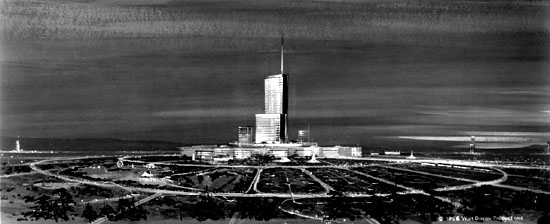
Walt Disney had a dream for the city of the future. It was EPCOT (as opposed to Epcot – lower case spelling – the theme park his dream became after he died). In EPCOT he said, no one would ever need to use a car, except to go for weekend pleasure drives. The entire city was planned around the pedestrian, with the Disney monorails acting as transportation between the city, the Magic Kingdom theme park to the north, and the industrial center and airport to the south. Within the city Wedway People Movers would serve as transportation between the city center and the outlaying housing areas. There were lots of green spaces and pedestrian and bike paths, all cleverly isolated from the roads. A pedestrian would never have to navigate a street crossing in EPCOT.
Sniff all you want at the 1950-ish world-o-tomorrow dreamland, but had Walt Disney’s vision come to pass that Experimental Prototype City Of Tomorrow would be perfectly positioned to weather the oil price shocks now and to come. The whole transportation system ran on electricity and you could generate that with any number of alternative sources. It didn’t have to be oil. And with residents not needing to use their cars for anything other then pleasure driving, they needn’t be so dramatically impacted by the rising cost of gas. Yes, goods and services would still cost them more. And probably the taxes to support the transportation infrastructure. But how many household budgets were absolutely crushed by the monthly cost of gasoline for commuting back and forth to work every day? How much of that contributed to the current economic collapse? People can’t spend money they don’t have, because the gasoline bill ate it all.
I love to drive. I love the automobile. I have been entranced by them since I was a kid. I make no bones about it. The fact that some folks seem to just loath automobiles completely mystifies me. I cannot imagine a time when I would not own one. And I would have loved to have lived in Walt Disney’s city of tomorrow. Because as a matter of fact, I love to walk too. And I hate commuting. And I absolutely despise traffic jams. A city built from the ground up around the pedestrian would have suited me just fine.
I was re-reading the previous post, and just realized that I’d driven Traveler the equivalent of somewhat over once around the earth at the equator. But so far all that’s been up a little bit into Pennsylvania (to Stroudsburg to visit a friend), twice to Ocean City New Jersey, twice to Florida…once all the way to Key West, once only as far as Orlando and Disneyworld…once to Memphis Tennessee, once to Hillsville Virginia, and a lot around central Maryland and between Baltimore and northern Virgina.
It’s just a small portion of Planet Earth I’ve been driving on, yet I’ve already racked up enough miles to have theoretically driven once around the equator.
You Knew The Maintenance Was Going To Be Expensive When You Bought It…(continued)
Mercedes-Benz cars made since 2004 have the new Flexible Service Scheduling system installed, which monitors the car’s usage and your driving habits and the level and condition of various fluids and figures out when the next service is due. I’m told that nagging is a popular pastime in Germany, so I reckon it’s no surprise that their cars nag you too. But for those absent-minded among us, and those who drive their cars a little harder then normal, it’s useful all the same. You don’t buy a car like this to just run it into the ground. That’s a waste of money for one thing, and an insult to all the work the engineers and factory workers put into making it for another.
You also get a booklet which outlines the recommended intervals, apart from the FSS system. My experience has been so far that the FSS system tracks pretty well with the typical recommended servicing intervals anyway. But not exactly. This time around, Traveler gave me an 800 mile extension on the 25,000 mile Service ‘B’ interval. I suppose that’s because I don’t drive it like a bat out of hell and I keep changing the oil at less then half the recommended interval. Oil, even synthetic oil, is cheap. Engines not so much.
800 miles before my Service ‘B’ was due, Traveler started nagging reminding me that its service ‘B’ was needed in 800 miles. I have an analog speedometer with a lovely gauge circling around an LCD screen that displays various messages to me from time to time, in addition to a host of other readouts I can choose from such as the odometer and travel computer. Every time I put my key in the ignition the speedometer display would nag helpfully remind me that service ‘B’ was due in 800, then 700, then 600, then 500, then 400, then 300, then 200 miles. You know you have to give in. So this morning I took Traveler in for its service ‘B’
Service ‘B’:
Inspect windshield wiper inserts and service windshield washer system (Replacement of wiper inserts additional*)
Inspect and rotate tires, record tread depth, and correct tire pressure. (Wheel balance additional*).
(excludes AMG, Sports Models, SLK, and vehicles with staggered wheels)
Engine oil change and oil filter replacement (Includes Mobil 1 synthetic oil)
Lubrication service (Includes hood hinges, lock cylinders, striker plates, sun roof tracks and top off all fluids)
Cooling system inspection (Includes antifreeze protection level, hoses and clamps)
Brake inspection (Includes check of pad thickness and condition of discs, fluids and lines)
Inspect heating and ventilation dust filter, replace if needed. (Replacement additional*. Dust filter prices vary by model)
Function check (Includes warning lamps, headlights, exterior lights, seat belts, windshield wiper and washer)
Inspect and lubricate throttle linkage
Check and clean air filter
Reset flexible service system counter
Inspect front axle ball joints; check steering play and power steering clutch; and rear differential levels
Inspect Poly V-Belt for condition
Inspect starting and charging system and service battery
Inspect climate control refrigerant
…which cost me all together $425.31. Whew! But this is one reason why I didn’t get an ‘E’ Class. The ‘E’ is bigger then I need anyway, but although I could probably have afforded the payments for one, I almost certainly couldn’t have afforded both the payments and the servicing too. And you don’t buy a car like this just to run it into the ground.
They gave my car a nice wash and interior cleaning and gave it back to me. I’m happy to say my 2008 Mercedes-Benz C300 has almost 26,000 miles on it now and not a single thing has gone wrong or needed fixing. Nothing. That car is still as solid as a vault and the best thing I have ever driven. Mercedes definitely has its groove back…
Mercedes-Benz dealerships have not only been hit hard by the slow car sales in recent months, they are also losing money in the service department. It seems that the increased Mercedes quality is finally paying off for consumers – not so much for dealers. Compared to 5 or 6 years ago, dealers were making record profit for servicing Mercedes vehicles, which cost Daimler millions in warranty cost. Ever since, Mercedes has pledged to increase quality and to bring consumers back the trust in the Mercedes brand.
It’s great to see that people have less quality issues these days, and just one way to see this is the decrease in customers visiting the service center, in some areas up to 30% less.
Warranty service comes out of the factory’s pocket not the dealer’s. So this is good for Daimler but not so much for the dealers. On the other hand, who do you want doing the routine servicing on a car like this? Not Jiffy Lube. You don’t just pull the plug on the oil pan on one of these and just let the old oil drain out, because the plug is situated a little higher up on the side so that if it accidentally comes out all the oil won’t leak out of the engine while you’re driving. To properly do an oil change on a Mercedes you have to pump the old oil out or you won’t get it all. Think Jiffy Lube will do that? If the dealers maintain a certain level of service quality that drivers expect for cars like these, then they won’t have to depend on the cars breaking down to make money. And besides, cars that are always breaking down drive customers away. Just ask GM, Ford and Chrysler where Toyota and Honda got their U.S. customer base from.
Normally I’d take Traveler on a nice long road trip now…but that’ll have to wait for warmer weather.
This blog is powered by WordPress and is hosted at Winters Web Works, who also did some custom design work (Thanks!). Some embedded content was created with the help of The Gimp. I proof with Google Chrome on either Windows, Linux or MacOS depending on which machine I happen to be running at the time.